Class A Truck Types Explained: Vehicles, Uses, and Career Paths
A Class A CDL is widely considered the most versatile commercial license because it allows drivers to operate large combination vehicles and opens the door to a wider range of jobs than most other CDL classes. Many beginners hear terms like tractor-trailer, tanker, flatbed, or livestock carrier without fully understanding how these vehicles differ in design, cargo, work environment, and long-term career potential. This guide explains the most common Class A truck types, how they are used in the real world, what rules affect them, and what kind of trucking careers they can lead to.
.jpg)
What is a Class A CDL?
A Class A CDL is the commercial driver’s license required to operate a combination vehicle with a gross combination weight rating (GCWR) of 26,001 pounds or more, as long as the towed unit has a gross vehicle weight rating (GVWR) over 10,000 pounds. In practical terms, this usually means the driver is operating a heavy power unit attached to a trailer substantial enough to trigger Class A licensing rules.
Most people associate a Class A CDL with tractor-trailers, and that makes sense because semi-trucks are the most recognized example of a Class A vehicle. However, the license is not limited to one equipment style. It can also apply to flatbed combinations, tanker configurations, livestock carriers, and other qualifying vehicle-and-trailer setups that meet the required weight thresholds. That is one of the most important things beginners need to understand early: Class A is not a nickname for one specific truck, but a legal license category tied to vehicle configuration and ratings.
Common Class A truck types explained
Tractor-trailers
Tractor-trailers are the most common and widely recognized Class A vehicles in the trucking industry. They consist of a powered tractor unit connected to one or more trailers, forming the standard combination most people picture when they hear the terms semi-truck, big rig, or 18-wheeler. In both public perception and industry practice, tractor-trailers are the central image of Class A driving.
The tractor contains the engine, cab, and drivetrain. The trailer carries the cargo. This division of labor is one reason tractor-trailer systems are so efficient. Carriers can pair tractors with different trailer types depending on freight demand, routes, customer needs, and cargo requirements. That flexibility makes tractor-trailers a cornerstone of freight transportation across the country.
These vehicles are heavily used in long-haul freight, regional distribution, and large-scale cargo movement. They move consumer goods, industrial products, food, retail inventory, packaging materials, automotive parts, and countless other freight categories. From warehouses and ports to distribution centers and stores, tractor-trailers support a major portion of the supply chain.
Several industries depend heavily on tractor-trailers, including:
- Retail distribution
- Manufacturing
- Food and beverage transportation
- General freight networks
- Consumer goods logistics
- Wholesale and regional supply chains
For new drivers, tractor-trailers often represent the most accessible entry point into the trucking world because many employers hire Class A drivers into general freight roles that use standard tractor-trailer combinations. These jobs can help a driver gain experience with backing, coupling, lane management, route planning, trip execution, and real-world freight operations.
Best career fit for tractor-trailer drivers
Tractor-trailer driving can support several different career paths depending on how much home time the driver wants, what type of freight they prefer, and how quickly they want to build experience.
OTR drivers
Over-the-road drivers are often the clearest fit for standard tractor-trailer work. These roles usually involve long-distance freight movement across multiple states, extended highway driving, and longer periods away from home. For many beginners, OTR work is where they first gain broad exposure to freight operations.
Regional route drivers
Regional drivers typically stay within a defined geographic area. They may still cover significant mileage, but they often get more predictable routes and more frequent home time than OTR drivers. Tractor-trailers are central to many regional freight operations.
Dedicated freight drivers
Dedicated drivers usually handle freight for a specific customer, route network, or account type. This can provide more routine, more predictable schedules, and a more stable operating pattern. Tractor-trailers are commonly used in these setups.
General freight entry-level roles
Many new Class A drivers begin in general freight because it provides foundational experience with the most common equipment in the industry. These jobs are often the first real step into a long-term trucking career.
Combination vehicles
One of the most important things beginners need to understand is that Class A does not refer only to a standard semi-truck. It applies more broadly to combination vehicles that meet the legal weight requirements. That means a Class A CDL is tied to the combination itself, not just to one iconic truck design.
A combination vehicle is any setup where a power unit is connected to one or more towed units, and the total configuration crosses the required thresholds. That can include traditional tractor-trailers, but it may also include other heavy towing arrangements that legally qualify under Class A rules. The key point is that the license category is based on ratings and configuration, not on whether the vehicle looks like the typical highway semi seen in advertisements or movies.
This matters because many new drivers assume job ads are only referring to tractor-trailers when they mention Class A. In reality, employers, trainers, exam materials, and regulations often use the broader language of combination vehicles. A driver who understands this terminology is better prepared to interpret what a job actually involves.
It also matters for safety and compliance. The driver’s responsibilities are shaped by the dynamics of operating a combination, including turning, braking, backing, coupling, trailer tracking, weight distribution, and overall vehicle control. In that sense, learning to operate a Class A vehicle is really about learning how to manage a heavy combination safely and legally.
Why the term “combination vehicle” matters in CDL training
This term appears frequently in CDL education for a reason. It teaches drivers to think beyond labels and focus on what the law actually regulates.
The term matters because:
- It appears in training materials, written tests, and regulatory language
- It helps drivers understand exactly what they are legally authorized to operate
- It connects licensing rules to real equipment setups used by employers
- It reinforces that Class A is about vehicle combinations, not just one truck style
- It helps students interpret endorsements, operational rules, and carrier expectations more accurately
For a beginner, understanding the phrase combination vehicle is a major step toward understanding Class A itself.
Tanker trucks
Tanker trucks are one of the most specialized and respected categories of Class A equipment. These vehicles are used to transport bulk liquids or gases, often in rounded or cylindrical tanks that are built specifically for fluid cargo. While many people think first of gasoline tankers, the category is much broader than fuel hauling alone.
Depending on the employer and the operation, tanker work can involve water, milk, chemicals, food-grade liquids, industrial fluids, oil products, or other specialized bulk cargo. The exact job can vary dramatically from one company to another. Some tanker routes are local and repetitive. Others are regional or long-distance. Some focus on relatively simple non-hazardous loads, while others involve highly regulated cargo with more complex compliance requirements.
What makes tanker driving different is not just the cargo type, but the behavior of that cargo in motion. Liquids shift. They surge. They continue moving even after the truck begins to brake or turn. That movement changes vehicle feel, balance, and stopping dynamics. A driver who is used only to dry freight may be surprised by how different a tanker feels on the road.
Because of that, tanker driving often requires extra knowledge and a more deliberate driving style. Braking must be smoother. Turning must be more controlled. Speed management becomes even more important. The driver must anticipate how liquid movement can affect balance and stability, especially during lane changes, curves, stops, or emergency maneuvers.
Some tanker jobs may also require additional endorsements. If the load qualifies as hazardous materials, the driver may need HazMat authorization as well as the relevant tanker credential. This adds both opportunity and responsibility. Employers often value specialized tanker drivers because the work requires more than basic equipment familiarity.
For drivers who want a specialized freight path, tanker work can be appealing. It may offer stronger earning potential in some sectors, a more defined career niche, and the satisfaction of mastering a distinct type of equipment and cargo behavior.
.jpg)
What makes tanker driving different from dry van work
Dry van work generally involves enclosed freight that stays relatively stable once properly loaded. Tanker work is different because the cargo itself changes how the vehicle responds.
Important differences include:
- Surge and liquid movement that affect stopping and turning
- More specialized safety procedures during loading, unloading, and transit
- Stricter cargo handling rules depending on the commodity
- Endorsement requirements in some situations
- Greater emphasis on smooth driving technique and anticipation
For the right driver, these challenges are not drawbacks. They are what make tanker work a serious and rewarding specialty.
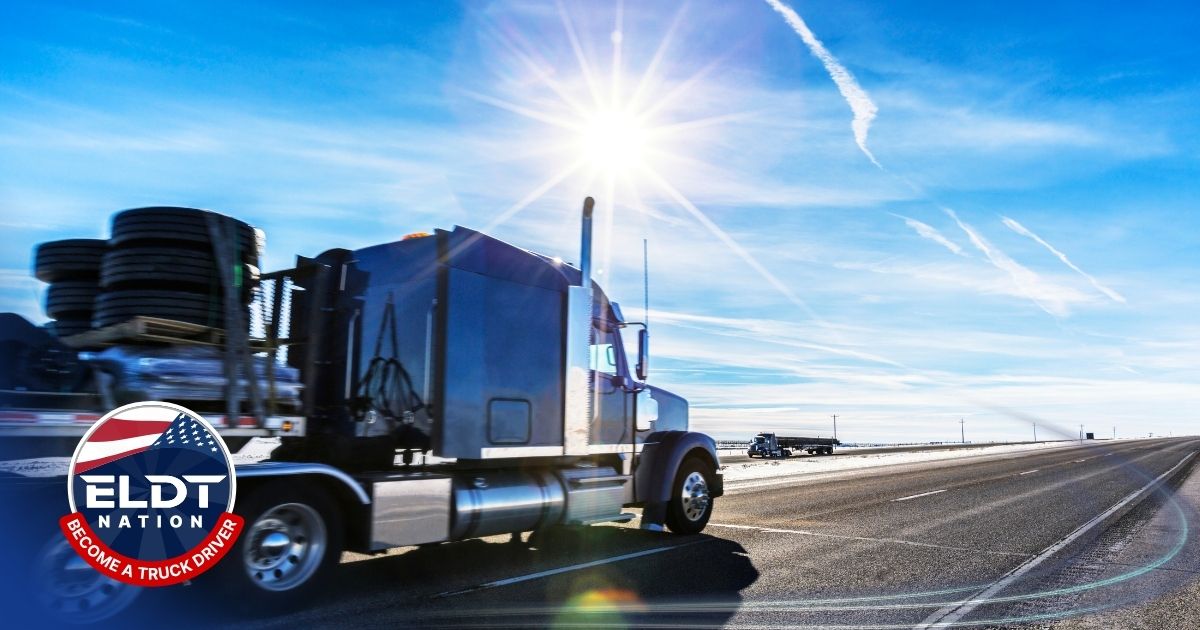
Flatbed trucks with trailers
Flatbed truck combinations are another major Class A category and one of the clearest examples of how trucking changes when freight does not fit into a standard enclosed trailer. A flatbed setup uses an open-deck trailer, allowing cargo to be loaded from the sides, rear, or top. This makes flatbeds especially useful for freight that is oversized, oddly shaped, exceptionally heavy, or difficult to load into a closed trailer.
Common flatbed freight includes:
- Building materials
- Machinery
- Industrial components
- Steel products
- Lumber
- Equipment parts
- Oversized loads requiring open-deck transport
Flatbed work plays a major role in construction, manufacturing, industrial supply, and infrastructure-related freight movement. While dry van freight is often more standardized, flatbed freight can vary significantly from one load to the next. That variation is part of what attracts some drivers to this niche.
However, flatbed trucking also tends to be more physically demanding than many enclosed freight jobs. Drivers may need to secure cargo with chains, binders, straps, edge protectors, or tarps depending on the load. That means the job often involves more outdoor work, more direct responsibility for load securement, and more hands-on participation in the transport process.
For some drivers, this is a major advantage rather than a drawback. They prefer freight work that feels more active, less repetitive, and more connected to the physical reality of the cargo. Instead of simply backing to a dock and waiting, flatbed drivers often play a more visible role in preparing loads for safe transport.
Flatbed work also builds skills that can be valuable later in a trucking career. A driver who becomes strong in securement, cargo awareness, and open-deck operations may be better prepared for specialized hauling opportunities down the road. In that sense, flatbed trucking can be both a job path and a skill-building platform.
Who should consider a flatbed trucking career
Flatbed work is not the best fit for every driver, but it can be an excellent match for the right person.
It often appeals to:
- Drivers comfortable with physical work
- Drivers who do not want every load to feel the same
- Drivers interested in construction, industrial, or heavy freight sectors
- Drivers who want to build specialized hauling skills
- Drivers who value hands-on involvement in cargo preparation and securement
For motivated beginners, flatbed can offer a strong mix of challenge, skill development, and career differentiation.
Livestock carriers
Livestock carriers are a specialized form of Class A equipment designed to transport animals rather than standard freight. When paired with qualifying trailers that exceed the required weight thresholds, these combinations fall under Class A rules. Although they may not be as widely discussed as tractor-trailers or tankers, they represent an important niche within the trucking industry.
Livestock hauling is fundamentally different from hauling inanimate cargo. When the load is alive, the job changes in several important ways. Route timing matters more. Ventilation matters more. Temperature awareness matters more. Driving smoothness matters more. The cargo is not simply something to move from point A to point B. It requires ongoing attention and responsible handling throughout the trip.
Because of this, livestock hauling often demands a more disciplined and attentive approach than some beginners expect. A livestock driver must think about more than delivery timing. They must also consider animal welfare, trailer conditions, driving style, route efficiency, and environmental factors that can affect the load. Harsh braking, aggressive turns, or unnecessary delay can have more serious consequences when transporting animals.
This type of hauling may be especially appealing to drivers with agricultural backgrounds or those who are comfortable working in rural, farming, or specialty freight environments. It often connects more closely to agricultural supply chains and may involve routes, schedules, and freight priorities that differ from mainstream retail or warehouse freight.
Livestock hauling is not usually the first path beginners think of when exploring Class A work, but for the right driver it can become a meaningful specialty. It combines the demands of commercial driving with a higher level of awareness about the nature of the cargo itself.
What to expect in livestock hauling
Drivers interested in livestock work should understand that it brings a unique operating environment and a different kind of responsibility.
Common realities of livestock hauling include:
- Time-sensitive routes that reduce unnecessary transport delay
- Added care responsibilities because the cargo is alive
- Specialized trailer considerations involving airflow, containment, and animal movement
- A niche career path that may appeal to rural and agricultural operators
- Greater importance of smooth, controlled driving and careful trip planning
Class A vs Class B: why the difference matters for career planning
Many new drivers compare Class A and Class B by asking which one is better. That is not always the best question. A better question is which one fits the driver’s goals, preferred work style, and long-term career plan. Both license types can lead to legitimate commercial driving careers, but they are designed for different kinds of equipment and different types of opportunity.
In general, Class A covers larger combination vehicles, especially where the trailer exceeds the weight threshold required by law. Class B, on the other hand, usually applies to heavy single vehicles such as straight trucks, buses, dump trucks, and other commercial units that do not involve the same type of large qualifying trailer combination. That basic difference shapes the job market available to the driver.
A Class A license usually provides more flexibility because it qualifies drivers for a wider range of trailer-based and long-distance freight roles. It is especially attractive for people who want access to over-the-road jobs, regional tractor-trailer work, specialized hauling, and equipment that can evolve with experience and endorsements.
That does not mean Class B is a weak option. Class B can still lead to strong careers in construction, delivery, passenger transport, waste collection, municipal service, and regional commercial work. For some drivers, Class B is the better fit because it may align more closely with local routes, daily home time, or a preference for single-vehicle operation rather than trailer management.
The reason Class A is so often preferred by career-minded beginners is that it provides a broader starting point. A driver who chooses Class A is often choosing flexibility. They are keeping more doors open from the beginning, especially if they are interested in long-haul freight, higher specialization, or future transitions across different freight categories.
The right choice depends on several real-world factors:
- Lifestyle goals and desired home time
- Comfort with backing and managing trailers
- Interest in long-haul versus local work
- Physical work preferences
- Willingness to pursue endorsements later
- Long-term income goals and specialization plans
A balanced comparison matters because not every driver wants the same career. Some want steady local work with predictable hours. Others want the widest possible access to the trucking job market. Understanding the difference between Class A and Class B helps readers choose based on reality, not assumption.
When Class A makes more sense than Class B
Class A often makes more sense when the driver wants:
- Broader job options across the freight market
- More access to long-haul and regional trailer-based roles
- A better entry point into specialized hauling
- Flexibility to add endorsements and expand later
- A license that supports multiple career directions over time
For someone who wants the widest starting platform in trucking, Class A is often the stronger long-term play.
Career paths available with a Class A CDL
Over-the-road trucking careers
OTR, or over-the-road trucking, usually refers to long-distance freight movement that can take drivers across multiple states and keep them away from home for longer periods. This is the version of trucking many people imagine first when they picture life behind the wheel of a Class A vehicle.
OTR work usually includes:
- Longer routes
- More highway driving
- Broader exposure to freight networks
- More time away from home
- Greater variety in locations, shippers, and road conditions
Many new drivers begin in OTR roles because these jobs are widely available and can help them build experience quickly. A new driver may learn more in a year of OTR work about trip planning, weather adaptation, route management, customer facilities, scheduling, and equipment handling than they would in a narrower role with less variety.
For some, OTR becomes a long-term career. For others, it is the first stage that helps them qualify later for regional, dedicated, or specialized positions.
Regional trucking careers
Regional trucking sits between long-haul and local work. Drivers usually operate within a defined geographic area rather than across the entire country, which can offer a better balance between mileage and home time.
Regional roles often appeal to drivers who want:
- Strong earning potential
- More predictable route patterns
- More frequent home time than OTR
- Continued experience with Class A combinations
- A structured middle ground between local and national freight
For many drivers, regional work is one of the most attractive career paths because it combines commercial mileage with a more manageable lifestyle. It can be especially appealing after a driver has already built some initial experience and wants a better balance between income and personal time.
Local Class A jobs
Not all Class A work involves sleeping in the truck or spending long stretches away from home. Many Class A drivers work in local roles that keep them closer to home and operate within a tighter service area.
Local Class A jobs may include:
- Local delivery involving trailer combinations
- Yard work and switching
- Dedicated account routes
- Construction-related hauling
- Terminal-based operations
- Day-cab freight movements
These jobs may appeal strongly to drivers who prioritize home time, routine, and familiarity with their operating area. In some cases, local jobs are highly competitive because many drivers value being home daily. In other cases, they may require prior experience because the work can involve tight urban maneuvering, frequent stops, or demanding schedule precision.
Specialized freight careers
Specialized freight is where many long-term Class A careers begin to differentiate. Instead of hauling general freight only, the driver builds skill in a particular category of cargo or equipment.
Examples include:
- Tanker
- Flatbed
- Livestock
- Heavy haul
Specialization can create long-term growth because it allows drivers to develop expertise that not every Class A holder has. A flatbed driver who becomes strong in securement and open-deck hauling may stand out differently from a tanker driver who understands liquid surge and hazardous-material protocols. A heavy-haul operator may move into even more advanced freight planning and route execution over time.
This kind of specialization can improve job-market differentiation and may open better opportunities later, but it also comes with more responsibility. The more specialized the work, the more skill, discipline, and compliance awareness the driver usually needs.
Owner-operator pathway
Some drivers eventually decide they want more control over their work and move toward the owner-operator path. That can mean owning or leasing the truck they use for business and taking on a greater share of financial and operational responsibility.
This path can appeal to drivers who want:
- More independence
- More direct control over loads and schedule
- A business-building path rather than only employee status
- Greater upside potential in the right market conditions
However, this route is not automatically better. It also brings higher risk, more paperwork, more business complexity, and more financial exposure. Expenses such as equipment costs, maintenance, insurance, downtime, and market volatility all become more personal. That is why owner-operator status should be viewed realistically. It is a business decision, not just a driving upgrade.
How truck type can influence your long-term career direction
The equipment a driver starts with often shapes the experience they build. That experience then affects what employers trust them to do next.
This matters because:
- Equipment often shapes a driver’s daily skill development
- Experience affects future job eligibility
- Specialization can increase both opportunity and responsibility
- Early freight choices can influence later career direction
- The type of work a driver enjoys may become clearer only after real-world exposure
A Class A CDL opens the door, but the equipment and freight path a driver chooses often determine where that door leads.
The biggest advantage of a Class A CDL is that it gives drivers room to grow. It is not just a license category. It is a gateway to multiple trucking careers, multiple freight sectors, and multiple long-term directions within the commercial driving industry.
Related posts