Dump Truck Training Cost in 2026: Pricing, Requirements, and What to Expect
Dump truck training in 2026 usually costs about $3,000 to $8,000 or more for a full Class B-focused program, though the real price depends on location, driving time included, school quality, equipment access, and which fees are bundled into tuition.
.jpg)
Why some students pay closer to $3,000 and others pay over $8,000
Several factors drive the price gap, and each one affects the student experience differently.
Regional training markets
Training costs vary by state, metro area, and local labor market. In higher-cost regions, schools often have higher facility expenses, insurance costs, instructor wages, and equipment overhead. That typically pushes tuition upward. In lower-cost areas, pricing may be more competitive, but the tradeoff may be fewer class dates, less equipment access, or more limited job connections after training.
Amount of behind-the-wheel instruction
This is one of the most important variables in total price. Classroom theory matters, but real skill development in a large commercial vehicle requires supervised practice. A school that offers only minimal seat time may charge less up front, but students who are not test-ready often end up buying extra hours later. By contrast, a school with more structured road and range time may cost more initially but reduce the risk of expensive retesting.
Included versus excluded services
Some schools include important items inside one tuition package. Others do not. For example, total out-of-pocket cost changes significantly depending on whether the quoted price includes:
- permit preparation
- ELDT theory
- pre-trip instruction
- road practice
- test-day vehicle rental
- FMCSA record submission where applicable
- retest assistance
- DOT physical coordination
A program can look affordable until the student realizes those items are billed separately.
Training model and school type
Private truck-driving schools, community colleges, workforce programs, and employer-sponsored routes all price training differently. Community colleges may sometimes offer lower tuition, but schedules can be less flexible. Private schools may move faster and provide more focused coaching, but at a higher cost. Employer-sponsored paths may lower the direct cost to the student, though they can come with employment commitments, reimbursement terms, or reduced flexibility in choosing where to work afterward.
Class size and instructor attention
Some students learn quickly in a group setting. Others need repeated walkthroughs of backing, turning, braking, or inspection routines. A small class or more personalized model often costs more because the school is allocating more instructor time per student. For many beginners, that additional coaching can be worth the price if it improves first-time pass potential and lowers stress during the test process.
A realistic breakdown of what your tuition may include
A good dump truck training program should not be evaluated only by its total number. It should be evaluated by its internal structure. In practical terms, a serious training package may include several of the following components.
Theory instruction
This can happen in a classroom, through an online learning platform, or in a blended format. Theory typically covers commercial driving fundamentals, road safety, vehicle systems, inspection routines, regulations, and test knowledge. If the student is a first-time Class B applicant subject to ELDT, theory must align with the federal training framework.
ELDT theory
For many first-time applicants, ELDT is not optional. Schools or providers offering this portion of training should be able to explain exactly how they satisfy federal requirements and how the student’s completion record is handled. If a training provider is vague about this, that is a warning sign. The Training Provider Registry exists for a reason: drivers need approved training for covered applications.
Yard and road driving practice
This is the practical core of training. Students need time to learn how to control a large single-unit commercial vehicle, judge space correctly, manage turns, brake smoothly, reverse safely, and stay composed in traffic. A program that gives students only a quick introduction often creates problems later when it is time to test or start real work.
Pre-trip inspection instruction
Pre-trip is one of the most underestimated parts of CDL preparation. Many students focus heavily on driving, then discover that inspection procedures are one of the biggest barriers to passing the exam. Quality programs spend real time on inspection sequence, terminology, repetition, and confidence.
Test-day vehicle access
This matters more than many first-time students realize. If a school does not include vehicle use for the skills test, the student may need to arrange a vehicle elsewhere and pay extra. That can add cost, stress, and scheduling complications.
Instructor support and progression guidance
Good instruction is not just about teaching maneuvers. It is also about knowing when a student is test-ready, where they are weak, and how to correct problems before those problems turn into delays and extra fees.
FMCSA record handling where applicable
For ELDT-covered applicants, proper training record submission matters. If a provider cannot clearly explain how this is managed, that alone should make a student slow down before enrolling.
What license do you need to drive a dump truck?
One of the biggest misunderstandings in this market is the idea that there is a special dump truck license separate from the CDL system. In reality, most future dump truck drivers are entering through the commercial driver licensing framework, and the key question is usually not “Do I need a dump truck license?” but “Do I need Class B or Class A?”
Why most dump truck jobs require a Class B CDL
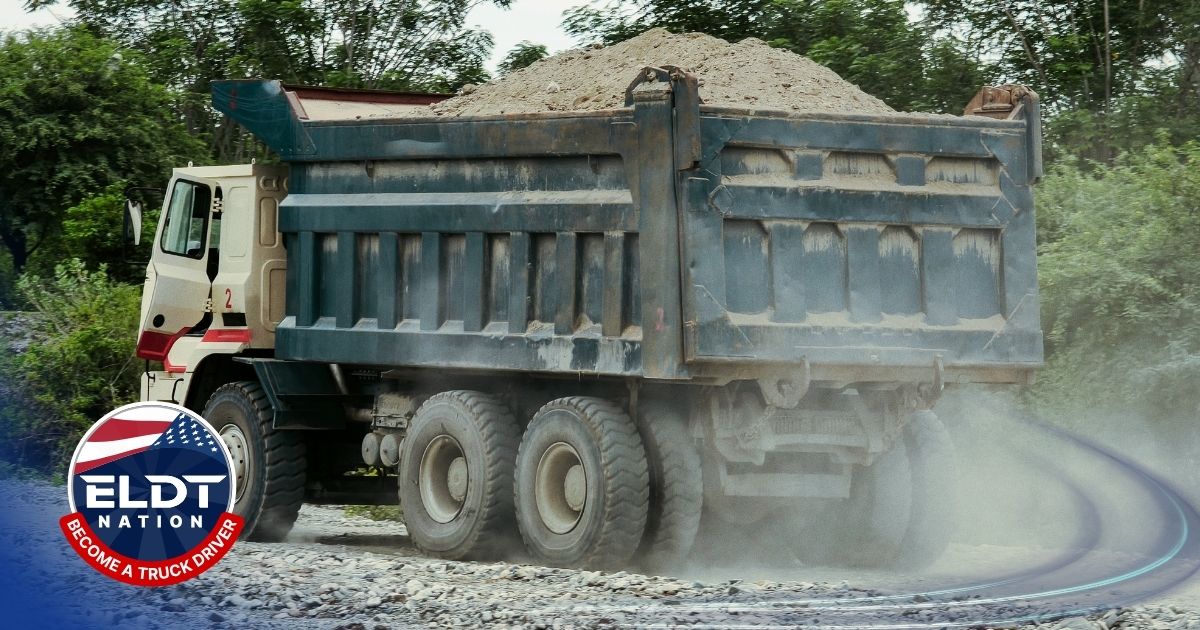
For most standard commercial dump truck jobs, the answer is Class B CDL. That is because many dump trucks are large single vehicles, not tractor-trailer combinations. In simple terms, Class B is commonly used for heavier single-unit commercial vehicles, which is why it fits so many straight dump truck applications.
This is important for search intent because many people typing “dump truck training” are really looking for Class B CDL training that prepares them for dump truck work. They may not know the licensing terminology yet, but that is usually the practical destination.
Class B is especially common in:
- construction hauling
- paving support
- aggregate delivery
- excavation work
- municipal and public works roles
- local materials transport
For students who want local or regional commercial driving without going straight into over-the-road combination vehicle work, Class B dump truck-related training is often one of the most direct entry paths.
When you may need a Class A CDL instead
Not every dump truck job stays within Class B territory. Some operations involve heavier combinations, especially when a vehicle is paired with a trailer that changes the licensing requirement. In those cases, the student may need Class A instead of Class B.
This matters in sectors where employers use configurations beyond a straight dump truck, such as:
- dump truck and trailer combinations
- broader material-hauling operations
- certain construction fleet setups
- roles that may expand into other combination-vehicle work
The practical takeaway is simple: check the actual job description before enrolling. A student who trains only for Class B and then applies for a role requiring Class A may end up spending more time and money than necessary. On the other hand, a student whose goal is a standard straight dump truck position may not need the extra cost and complexity of Class A training.
Do you need endorsements for a dump truck job?
In many basic dump truck roles, no extra endorsement is required by default beyond the correct CDL class. However, that does not mean endorsements never matter. Specific employers, cargo types, or vehicle uses may create additional requirements depending on the work environment and the equipment involved.
The most important thing is not to overcomplicate the entry path. Most people starting toward a normal dump truck role should first focus on:
- the correct CDL class
- ELDT applicability
- permit and knowledge testing
- quality behind-the-wheel preparation
Endorsements should be viewed as situational, not automatic. Students should match their training decisions to the actual jobs they plan to pursue rather than assuming they need every possible credential on day one.
Do dump truck drivers need ELDT in 2026?
For many students, yes. This is one of the most important compliance issues in the entire process, because misunderstanding ELDT can delay testing and create serious confusion about whether a training program actually prepares the student legally as well as practically.
Who must complete ELDT
FMCSA’s ELDT rules apply to drivers seeking to obtain a Class A or Class B CDL for the first time, to Class B holders upgrading to Class A, and to first-time applicants for certain endorsements including school bus, passenger, and hazardous materials. That means many first-time dump truck trainees pursuing Class B are within the ELDT framework.
This point alone changes how students should shop for training. A school is not just selling instruction. It is selling a path that has to line up with federal requirements for covered applicants.
What ELDT includes
ELDT includes required theory instruction, and for covered CDL applicants also involves behind-the-wheel training through a registered provider structure before testing. In addition, training completion has to be recorded properly through the FMCSA Training Provider Registry system before the student can move forward to the relevant test stage.
That is why students should always ask:
- Is your program designed for first-time Class B applicants?
- Are you listed in the Training Provider Registry?
- Does your training cover only theory, or both theory and behind-the-wheel support?
- How is completion reported?
If the answers are vague, the student is taking a risk.
Why ELDT matters when comparing dump truck schools
A very cheap training option may not be a bargain if it does not support the compliance side correctly. In 2026, schools and providers need to be compared on more than price alone. Students should verify both provider legitimacy and scope of training before making a decision.
A good program should make the following clear:
- who the training is for
- whether ELDT applies to the student’s situation
- what parts of training are included
- what must still be completed elsewhere
- how the student moves from training to testing
In other words, cost matters, but readiness and compliance matter more. A cheaper program that leaves a student confused, incomplete, or unprepared can become the more expensive choice very quickly.
Dump truck training requirements in 2026
Once students understand price and license class, the next question is what they need in order to begin. Requirements can vary somewhat by state and employer, but the broad path follows a recognizable pattern.
Basic eligibility requirements
Most new students should expect to need:
- a valid non-CDL driver’s license
- acceptable identification and residency documents
- a driving record that meets school and employer expectations
- medical qualification where required for CDL operation
FMCSA notes that a permit holder must already have a valid regular operator’s license and complete the required knowledge and qualification steps through the state process.
In practical terms, this means a student usually cannot show up with only interest and payment and expect immediate training. Documentation, eligibility, and testing sequence all affect how quickly the process moves.
Age requirements explained clearly
For interstate commercial motor vehicle operation, the federal rule is generally 21 years old or older. At the same time, many states allow some CDL activity beginning at 18 for intrastate driving, which means work restricted to within state borders. That can still open some dump truck opportunities, but it may narrow the range of employers or routes available.
This is an important distinction for younger readers. A person may be able to begin a CDL path before 21, but the job market available to them may be more limited until they are old enough for broader interstate eligibility.
Permit, written tests, and road test expectations
Most students should expect the training path to involve several steps:
- obtaining a commercial learner’s permit
- passing required knowledge tests
- covering air brakes when applicable
- completing required training
- passing the skills and road test
FMCSA’s CDL guidance explains that first-time Class A and Class B applicants issued a CLP on or after February 7, 2022 must complete ELDT with a registered provider before testing, while states may also impose additional requirements.
This sequence matters because it affects both timeline and budget. If a student struggles with the permit phase, delays scheduling, or needs extra coaching before the skills test, the total cost can rise even if the original tuition number stays the same.
What is included in dump truck training?
Students make better decisions when they understand what they are actually buying. Dump truck training is not one isolated skill. It is a progression from knowledge to control, from repetition to confidence, and from compliance to employability.
Classroom or online theory instruction
Theory lays the foundation for everything else. It usually includes:
- core CDL knowledge
- safety principles
- vehicle systems
- inspection rules
- regulations
- hazard awareness
- operational basics
For ELDT-covered applicants, theory also has a compliance role, not just an educational role. That is why the provider and content structure matter so much.
Behind-the-wheel and range training
This is where knowledge becomes usable skill. Students must learn how to handle a large single-unit commercial vehicle in a controlled but realistic way. That generally includes:
- backing
- turning
- lane positioning
- stopping and braking
- spatial judgment
- maneuvering in tighter work-related conditions
- building confidence before the road test
For a future dump truck driver, this step is crucial because the work environment often involves tighter sites, variable surfaces, and a need for calm vehicle control rather than just highway comfort.
Pre-trip inspection and test preparation
Pre-trip inspection is one of the most important parts of CDL preparation because it tests whether the driver can identify safety-critical components and explain what they are checking. Many students underestimate this portion until they begin practicing it seriously.
A good program should help students:
- build a repeatable inspection routine
- understand what examiners expect
- memorize efficiently without sounding mechanical
- connect inspection steps to real safety logic
- correct weak areas before test day
Support services that affect value
The best training programs are not always the ones with the flashiest marketing. Often, the real value shows up in support around the training itself. That may include:
- flexible scheduling
- extra help before a retest
- lower student-to-instructor ratio
- better communication
- help understanding the next licensing steps
Hidden costs many future dump truck drivers forget to budget for
One of the most common mistakes new drivers make is assuming tuition tells the whole story. In reality, the advertised school price is only one part of the total path to becoming dump-truck-ready, and a program that looks cheap at first can become more expensive after permit fees, medical requirements, extra practice time, missed work, and retesting are added.
This is why the smartest question is not “What is tuition?” but “What is the full out-the-door cost to get me from enrollment to test-ready status?” That question forces schools to be specific about what is included, what is optional, and what will become your responsibility later. Before you enroll anywhere, ask for a written breakdown of every required and likely cost, not just the headline number.
Permit and DMV fees
Even if a school advertises one flat training price, the state licensing process usually brings separate costs. FMCSA explains that getting a Commercial Learner’s Permit involves state fees, knowledge testing, driving-record checks, and state-specific documentation requirements, which means permit-related costs are often outside tuition unless the school clearly says otherwise.
Depending on the state and the structure of the program, future dump truck drivers may need to budget for:
- CLP application fees
- written knowledge-test fees
- air brake test fees, when applicable
- CDL skills-test fees
- license issuance fees
- duplicate or rescheduling fees if something changes
These costs may not seem huge one by one, but they add up quickly, especially if you are testing more than once or if your state requires separate charges at different steps. A school with a slightly higher tuition that includes permit prep, scheduling support, and test-day coordination may actually save money compared with a lower-priced program that leaves every DMV step on the student.
DOT physical, drug screening, and medical paperwork
FMCSA states that most types of commercial driving require proof of medical qualification, which usually means obtaining a DOT medical card through a physical exam before or during the CDL process. That makes medical clearance a routine part of the path, not a surprise extra.
What students often forget is that the medical side can involve more than a single appointment. Depending on the job target, employer expectations, and state procedures, costs may include:
- DOT physical exam
- medical certificate paperwork
- vision-related follow-up
- documentation from a primary-care provider or specialist
- drug screening, if required by the school or employer
- repeat visits if there is a paperwork issue or temporary clearance
This matters because a student may compare two schools based only on tuition, then realize later that neither price included the medical side of the process. If one school helps coordinate these steps and another leaves the student to figure them out alone, the difference in convenience and timing can be significant.
Retest fees and extra driving hours
This is where the “cheap program” problem often becomes obvious. A school may offer a low base price, but if the included driving time is too limited, many students end up needing paid add-on hours before they feel ready for the road test.
Retest-related expenses can include:
- additional behind-the-wheel practice
- extra pre-trip coaching
- repeat skills-test fees
- another vehicle-use fee for test day
- instructor time for remedial practice
Students should never assume they will need extra practice, but they should absolutely ask what happens if they do. Some schools are transparent and say, in effect, “Here is what is included, and here is the hourly rate after that.” Others do not mention it until the student is already committed. That is why first-time pass readiness is not just a quality issue. It is a budgeting issue.
Transportation, missed work time, and gear
Some of the most overlooked expenses are not paid to the school at all. They come from the simple reality that training takes time, travel, and schedule flexibility.
Students may need to account for:
- gas or public transportation to and from training
- hotel costs if the school is not local
- unpaid time off from work
- child-care adjustments
- food during long training days
- basic workwear or safety gear if the program or employer expects it
These indirect costs can be substantial, especially for adults balancing a current job, family responsibilities, and a tight budget. A faster program is not always the better program, but schedule structure absolutely affects total cost. Training that looks affordable on paper can become expensive if it forces a student to miss more work than expected or travel repeatedly for scattered sessions.
Financing costs if you use payment plans
Financing can make training accessible, but it can also increase the real price if students focus only on the monthly payment instead of the total amount repaid. The right financing option may still be worth it, especially if it helps a student start sooner and move into paid work faster. Still, it should be evaluated carefully.
Ask direct questions such as:
- Is financing offered by the school or by a third party?
- What is the total repayment amount?
- Are there interest charges or service fees?
- Is there a penalty for late payment?
- Do payments begin immediately or after completion?
This matters even more when comparing online theory providers with full in-person schools. ELDT Nation’s materials, for example, emphasize transparent pricing, affordable one-time payment options, and financing availability for accessibility, which gives students more clarity than training providers that advertise a low entry price but obscure the total repayment structure.
The larger lesson in this entire section is simple: the cheapest tuition is not always the cheapest total path. A serious student should always ask for a full cost breakdown that includes school charges, state fees, medical steps, possible retests, and any likely add-ons before making a decision.
Start your dump truck training path the smarter way
If you need FMCSA-approved theory training before moving into the hands-on phase, ELDT Nation is a practical first step. It gives future Class B drivers a flexible, affordable way to complete required theory training, build confidence, and move faster into CDL school and behind-the-wheel preparation.
.jpg)
Related posts