List of Prohibited Drugs for CDL Drivers: A Practical Compliance Guide
CDL drivers are held to a higher medical and safety standard because they operate large commercial vehicles in environments where even a brief lapse in alertness can have life-changing consequences. A single drug, medication, or supplement decision can affect reaction time, judgment, coordination, certification status, employability, and public safety. This guide explains which substances are prohibited, how prescription and non-prescription medications are evaluated, what the DOT drug panel actually tests for, and why not every medication automatically ends a CDL career, even though some are clearly disqualifying while others depend on Medical Examiner review.
.jpg)
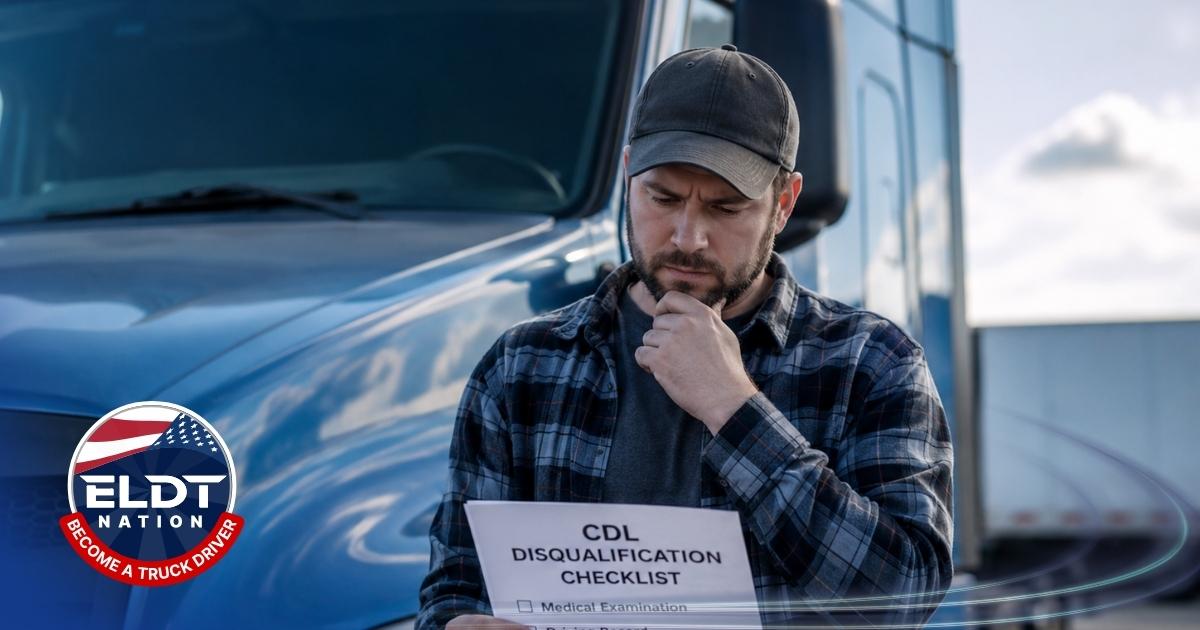
What medications and drugs can disqualify a CDL driver
The basic FMCSA rule every driver should understand
The starting point is simple but extremely important: a CDL driver cannot take a controlled substance or prescription medication without a prescription from a licensed practitioner. Under FMCSA guidance, if a driver uses a drug identified in 21 CFR 1308.11, or uses another substance such as amphetamine, a narcotic, or any other habit-forming drug in a way that falls within the disqualifying standard, the driver is medically unqualified.
That means unlawful use is disqualifying. But the rule does not stop there. Lawful use also does not automatically make a driver medically qualified. A valid prescription helps establish that the medication is being used legally, yet the Medical Examiner still has to decide whether the medication and the underlying condition are compatible with safe CMV operation. FMCSA explicitly recognizes an exception in which the prescribing doctor may state that the driver is safe to operate a commercial motor vehicle while using the medication. Even then, the Medical Examiner may certify the driver, but is not required to do so.
This distinction matters because many drivers assume, incorrectly, that “prescribed” automatically means “allowed.” In the CDL world, the more accurate rule is this: legal use and medical qualification are related, but they are not the same thing.
The main categories of prohibited or disqualifying substances
This is the core of the guide. Some substances are clearly incompatible with CDL medical qualification under federal rules, while others trigger deeper Medical Examiner review because of their side effects, abuse potential, or the condition they are used to treat.
Schedule I controlled substances
FMCSA guidance points directly to drugs identified in 21 CFR 1308.11, the federal schedule associated with Schedule I controlled substances, when describing what makes a driver medically unqualified. In practical terms, these are substances federal law treats as incompatible with commercial driving qualification because of their abuse potential, lack of accepted medical status under that framework, or both. For CDL purposes, this category is fundamentally incompatible with safe CMV operation under federal standards.
Marijuana
Marijuana remains one of the biggest compliance traps for CDL drivers because many drivers confuse state law with federal law. Even where marijuana is legal for recreational or medical use under state law, CDL drivers remain subject to federal standards. Under those standards, marijuana use is still disqualifying from a DOT drug-testing and CDL compliance standpoint. That means a driver cannot rely on state legalization as protection. Medical marijuana creates the same federal problem: even if authorized under state law, it remains inconsistent with federal CDL drug rules.
The practical risk here is enormous. Some drivers assume occasional off-duty use is private and harmless. But DOT-regulated testing does not operate on a state-by-state marijuana legality model. It operates on a federal safety model. For CDL drivers, that difference can decide both certification and employment.
Cocaine
Cocaine is prohibited because it can seriously distort judgment, increase impulsivity, heighten aggression, and disrupt the stable decision-making required for safe commercial driving. It may create a false sense of confidence while reducing careful risk assessment, and the rebound effects after use can include fatigue, instability, and poor concentration. In a safety-sensitive occupation where consistency matters, cocaine has no place. It is also one of the substances specifically included in the DOT drug-testing panel.
Amphetamines and methamphetamine
Amphetamines require a more careful explanation because this category includes both unlawful stimulant use and, in some cases, lawfully prescribed medications. FMCSA guidance expressly mentions amphetamine as an example of a substance that can make a driver medically unqualified. Unauthorized use is plainly disqualifying. But even prescribed stimulant medication does not get a free pass. The Medical Examiner still has to evaluate whether the drug, the dosage, the underlying diagnosis, and the driver’s actual functioning are compatible with safe CMV operation.
The safety concerns are not limited to obvious intoxication. Stimulant-type substances can produce:
- overconfidence
- agitation or irritability
- sleep disruption
- erratic concentration
- a mismatch between how alert a driver feels and how well the driver is actually functioning
Amphetamines, including methamphetamine and MDMA-related analytes, are also part of the DOT testing framework, which is another reason CDL drivers must understand this category clearly.
Opioids and narcotics
Opioids and narcotics create concern because they can impair alertness in ways that directly undermine safe vehicle operation. The most common risks include sedation, slowed reaction time, mental clouding, reduced concentration, and delayed responses in traffic. That does not mean every pain treatment automatically disqualifies a driver, but it does mean opioid use is a major compliance and medical-certification issue. Some lawfully prescribed pain medications may still trigger a deeper medical review if they could adversely affect safe CMV operation.
This is one of the most misunderstood areas for drivers because it combines two questions at once:
- Is the medication being used legally?
- Does the medication allow safe commercial driving?
A driver may be able to answer yes to the first question and still fail the second. That is why Medical Examiner review remains central.
Phencyclidine (PCP)
PCP is included in the DOT testing panel because of its severe impairment potential. It can disrupt perception, judgment, coordination, and behavioral control so dramatically that it is fundamentally incompatible with safety-sensitive transportation work. There is no practical gray area here for CDL compliance. PCP represents the kind of high-risk impairment federal drug rules are designed to keep out of commercial driving.
Other habit-forming drugs
FMCSA guidance does not limit concern only to the most publicly discussed drugs. It also refers to “any other habit forming drug,” which is important because drivers sometimes focus too narrowly on the familiar five-panel substances and ignore the broader medical qualification standard. If a substance is habit-forming, impairing, or otherwise capable of adversely affecting safe operation of a CMV, it may still create a disqualification or certification problem even if it is not the most commonly discussed example in casual trucking conversations.
That broader language matters because real-world compliance is not just about memorizing a short banned list. It is about understanding the underlying rule: anything that impairs safe driving, or raises serious safety concerns under the medical standard, can become a disqualifying issue.
Synthetic and emerging substances
Drivers should also be cautious about synthetic cannabinoids such as Spice, designer stimulants, and other emerging substances. The fact that a drug sounds new, is sold under a misleading label, or is less familiar than marijuana or cocaine does not make it safe for CDL purposes. These substances can still produce serious impairment, unpredictable reactions, or compliance consequences. From a practical safety standpoint, “not specifically named in a casual conversation” never means “acceptable for a CDL driver.” The safest interpretation is conservative: unfamiliar psychoactive substances are a major risk, not a loophole. This is an inference based on the broad federal impairment and qualification framework, along with the evolving nature of DOT drug-testing policy.
.jpg)
DOT drug testing panel: what CDL drivers are actually tested for
The standard DOT drug panel
DOT drug testing for regulated transportation workers remains centered on a five-category drug panel. Under current Part 40 language and DOT guidance, the required drugs are:
- marijuana
- cocaine
- amphetamines
- opioids
- phencyclidine (PCP)
Within those categories, confirmatory testing can identify specific analytes. For example, the amphetamines category includes compounds such as amphetamine, methamphetamine, MDMA, and MDA in the DOT framework, while the opioid category includes the expanded opioid testing approach DOT has described since the 2018 terminology and panel updates.
This is an important practical point for drivers: the DOT panel is still often casually called a “five-panel” test, but the actual testing structure within those categories is more detailed than many people assume. A driver who thinks only in broad street-drug terms may overlook the fact that certain prescription-related substances can still fall within the testing and review process.
Why this testing panel matters
This testing panel matters because it reflects the substances most associated with serious impairment and transportation safety risk under DOT policy. It is not random, and it is not just a paperwork requirement. It is designed to catch drug categories that can impair reaction time, judgment, coordination, attention, and behavioral control in ways that are especially dangerous in commercial transportation.
It also matters because many CDL drivers misunderstand the line between illegal substance use and medication risk. A driver may think, “I do not use illegal drugs, so this does not really apply to me.” But that is too simplistic. Drivers also need to understand:
- whether a prescribed medication could affect qualification
- whether a medication can trigger review through the testing process
- whether a lawful prescription still raises safety concerns for the Medical Examiner
- whether state-level legal products are still banned under federal CDL rules
That is why compliance education has to go beyond memorizing the panel. Drivers need to understand the relationship between testing, medical certification, and safe operation.
False positives and confirmatory testing
False positives are uncommon, but they are not impossible. DOT testing does not treat every initial non-negative laboratory signal as a final result without further review. Instead, the process includes confirmatory testing and review procedures designed to improve accuracy and reduce the risk of an incorrect final outcome. DOT’s Part 40 procedures exist specifically to standardize how transportation workplace drug testing is conducted and how results are handled.
For drivers, the practical takeaway is reassuring but important: a non-negative result does not simply get stamped and finalized without additional scrutiny. The testing process includes safeguards, and confirmatory review is part of what gives DOT testing its compliance credibility. That does not remove the seriousness of a non-negative result, but it does mean the process is not supposed to rely on a casual or one-step conclusion.
Which prescription medications create the biggest compliance risks?
.jpg)
Over-the-counter medications CDL drivers should use with caution
Why OTC does not mean safe for driving
Many drivers make the mistake of treating over-the-counter medication as automatically harmless because it does not require a prescription. That assumption can be dangerous. OTC medications can still affect alertness, slow reaction time, cloud thinking, or interfere with sleep in ways that matter in a commercial driving job. FMCSA guidance specifically confirms that non-prescription medications are part of the Medical Examiner’s review when determining whether a medication could adversely affect safe CMV operation.
In other words, the fact that a product is available on a pharmacy shelf does not mean it is safe to take before driving a commercial motor vehicle. OTC status is about access, not about CDL suitability.
Common OTC categories that may affect compliance
Antihistamines
Sedating antihistamines are one of the most important OTC risk categories for drivers. They can cause drowsiness, slowed thinking, reduced alertness, and a general “foggy” feeling that is incompatible with the sustained attention required in trucking. The problem is not limited to feeling sleepy enough to close your eyes. Even milder sedation can reduce responsiveness and situational awareness, especially on longer trips or during monotonous highway driving.
Cold and flu medications
Cold and flu products are another major risk because many are multi-symptom formulas. Drivers often focus on the symptom relief and ignore the ingredient combination. A single product may include a sedating antihistamine, a cough suppressant, a decongestant, and a pain reliever all in one dose. That increases the chance of unwanted side effects and makes it harder for the driver to predict how the body will respond. Multi-ingredient formulas are especially risky when the driver is already fatigued or under-slept.
Sleep support products
OTC sleep aids can be just as problematic as prescription sleep products if they leave lingering next-day effects. Drivers sometimes assume these products are mild because they are sold openly, but many can still cause next-morning grogginess, slowed reactions, and reduced mental sharpness. In a CDL context, those residual effects matter just as much as the intended nighttime benefit.
Decongestants and stimulating ingredients
Not every OTC risk comes from sedation. Some products create the opposite problem. Decongestants and stimulant-like ingredients may cause jitters, an elevated heart rate, sleep disruption, restlessness, or uneven concentration. A driver who takes one to feel more functional may end up less stable, less comfortable, or less able to maintain calm, focused driving over time.
Practical OTC safety rules for truck drivers
The smartest way to handle OTC products is to treat them with the same seriousness you would give a prescription medication. A few practical habits can prevent a great deal of trouble.
Truck drivers should:
- read labels carefully, especially any warning about drowsiness, machinery, or driving
- avoid products that advise against operating heavy machinery or driving
- try any new medication off duty first, not right before a shift
- ask a pharmacist or doctor before using a product if there is any uncertainty
- avoid stacking multiple OTC products without understanding the ingredient overlap
These habits are simple, but they are highly effective because they address the real risk: taking a familiar product casually in a job where casual medication decisions can have serious consequences.
Supplements, herbal products, and “natural” remedies: hidden compliance risks
Why supplements deserve attention
Supplements are often underestimated because they are marketed as wellness products rather than medications. But that marketing image can be misleading. FMCSA guidance specifically says the Medical Examiner may review supplements as part of determining whether anything a driver uses could adversely affect safe CMV operation.
That matters because supplements can affect:
- alertness
- sleep quality
- anxiety levels
- heart rate
- mental sharpness
- drug testing outcomes in some situations
Some drivers disclose prescriptions and OTC products but leave out supplements because they do not think they count. From a CDL safety standpoint, they absolutely can count.
Common risks with supplements
The main risks with supplements are not always obvious at first glance. A bottle may look harmless while still creating a meaningful compliance problem.
Common supplement-related risks include:
- sedation from calming or sleep-oriented herbal products
- stimulant-like effects from energy, focus, or performance products
- unlisted ingredients that are not clearly disclosed on the label
- contamination or poor manufacturing quality
- ingredient combinations that create unpredictable effects
This area deserves extra caution because product labeling is not always as reliable as drivers assume. A supplement marketed as natural or performance-supporting may still create physical or cognitive effects that are unsafe for commercial driving.
Best practice before using any supplement
The best practice is conservative and straightforward. Before using any supplement, a CDL driver should discuss it with a healthcare provider, disclose it to the Medical Examiner, and stick to reputable products rather than questionable brands or “mystery blend” formulas. FMCSA’s medication-review framework supports this cautious approach because supplements are explicitly part of what may be reviewed.
The safest approach is proactive disclosure, strong medical documentation, and conservative decision-making. Drivers protect themselves best when they ask questions early, disclose all medications honestly, pause when side effects are uncertain, and treat Medical Examiner review as a normal part of professional compliance rather than as an obstacle to hide from.
Related posts